Energy Savings: Why Should We Be Concerned With Conserving the Quality of the Available Energy?





MHI Decarbonization Electric Heating Products

1000 J = 1 kJ (Kilojoule) = 0.9485 BTU = 0.0002778 kWh
1 kWh = 0.03413 Therm [U.S.] = 3.6e+6 Joules.
One Therm (TH) = 100,000 BTU
Energy, Power, and Thermodynamics
1 J = 1 kg m/s^2
The BTU is also an energy unit. 1kJ (Kilojoule) = 0.9485 BTU
Electric companies use kWh (Kilowatt-Hour) for electricity usage, or Therm(TH) or CCF (for a particular gas), as these are what the power companies use as the price per unit of energy.
More energy unit conversions and a brief tutorial….
Energy is ubiquitous. It is required for everything. The First Law of Thermodynamics states that Energy is a conserved quantity. While the Second Law of Thermodynamics states that you can never decrease the total entropy of the universe, it does not forbid you from changing the form of that energy. Although total energy is conserved, its quality (or work potential) degrades as it is used. Using energy generates entropy, and the rate of that generation is fundamental to thermodynamics. To preserve work potential, energy quality must be conserved. We use and degrade about 620 EJ (ExaJoules) of Energy annually. Improving energy efficiency implies doing better with less energy. Efficient energy use saves money. Efficient energy use preserves its quality better than inefficient use. This is an aspect of deep decarbonization.
Review Radiative Heat Transfer.
Check out decarbonization information and products.
1 Exajoule (EJ) = 1,000,000,000,000,000,000 Joules. The world uses about 620 EJ of energy in various forms every year. This number is rising. When energy is used, it degrades. All of us must do our part to manage energy better. One way is by utilizing SmartThermal™ devices. These new machines and devices significantly reduce the end-use energy required to achieve a defined objective. A few such devices are discussed below.
1 PJ (PetaJoule)= 1,000,000,000,000,000 i.e. 10^15 Joule.
1 EJ (exaJoule) = 1,000,000,000,000,000,000, i.e., 10^18 joules. The Watt (W) is a unit of power, i.e., the rate of energy use (or supply) per unit time.
1 J/s (Joule per second) = 1 W (Watt)
Power is sometimes expressed in alternate units like BTU/h or Horsepower (hp)
Power-Units Conversion: 1 kW (kilowatt) = 3414 BTU/h
0.746kW= 1 brake-hp
The power rating of steam boilers is in units of BHP (boiler-horsepower)
One BHP (Boiler Power)= 33,500 BTU/h = 9.803 kilowatts
(The Boiler-BHP power unit is a bit confusing because BHP could be confused with brake horsepower (bhp), which is an auto-industry term)
Despite all the talk of “green energy,” fossil fuels still supplied about 80 percent of the world’s energy in 2022. Coal use is now falling (from 30 percent in 2015 to 27 percent in 2020), while renewables are increasing (from 2 percent in 2015 and 3 percent in 2016 to 6 percent in 2020). Natural gas produces about 117 pounds of CO2 per MMBtu equivalent, about half the amount produced by coal for the same amount of energy; however, when accounting for H2O and CH4 (methane), the major component of Natural Gas, GHG emissions from natural gas production are very high. In 2025, sustainable (renewable) energy accounted for approximately 34% of global electricity production. For the first time in modern history, renewable energy surpassed coal to become the world’s leading source of electricity.
Smart, efficient, and sustainable electrical and industrial heating are the keys to success. Computers were miniaturized with smart materials, and advances in nanomaterials processing are now miniaturizing thermal devices. We must use smart heating devices to decarbonize quickly.
Spurred by advances in modern thermodynamics, good progress has been made in developing smart energy devices. A range of industrial-use innovative products that perform the same objectives as before but with lower energy use (by >90% or more improvement) have now become available. The US manufacturing sector accounts for almost 10% of the GDP and uses nearly 30% of the energy. Nearly half of this energy (thousands of trillions of Kilowatt-Hours per year) is used for steam and process heat (per DOE publications). We expect any improvements in this usage to help with common energy-use issues like climate change.
Any energy-conversion device for an objective – such as lighting, anti-bacterial steam production, process-heat generation, or transportation- can be considered a machine. Such machines are rated by their power. Power measures the rate of energy conversion. The most commonly used engineering units for power are Kilowatts (i.e., Kilojoules per second) or BTU/hr. 2 kW = 6,829 BTU/hr. The 2 kW number is an approximate average value for daily-use devices for cooking, lighting, drying, ironing, transportation, and other devices commonly used in a US household. As suggested in one of the articles in the Journal “Nature,” Oct. 2017 issue, the use of high-temperature energy transfer can lead to some of the best efficiencies and productivity enhancements for many processes employed for materials and energy conversions. This is the MHI specialty. MHI manufactures devices that significantly reduce downstream energy use, either by processing with superheated steam (compared to standard steam) or by producing friction-free surfaces using cascade e-ion plasma (compared to normal plasma).
Energy Conservation allows us to benefit from the Mechanical And Thermal Advantages that Levers to Heat Pumps provide.
For most individual users, a good energy-efficiency profile and related cost savings come from using less power to meet the same process objective in a shorter time. Most often, this is best enabled by high-quality, high-grade energy delivered by a modern smart-power device. Great scientists, mathematicians, and technologists – several mentioned below- have influenced the development of smart devices. Such devices are now used in both the commercial and industrial sectors. Electric high-temperature devices are an essential group of smart power devices. MHI specializes in high-temperature materials, devices, and controls.
The brilliant Emmy Noether (1882-1935) provided the fundamental reason for energy conservation in our local universe: continuous time symmetry. However, this also helped us understand that we can think about Energy in more ways than just ‘work’. The understanding of energy began with a core thermodynamic principle – namely, the principle of energy conservation. (The First Law of Thermodynamics) with “heat” and “work” equally included in the balance, arguably, that began with Nicolas Sadi Carnot (1796–1832), Julius Robert Mayer (1814–1878), Rudolf Julius Emanuel Clausius (1822– 1888), James Clerk Maxwell (1831 –1879), and James Joule (1818–1889). The primary laws of thermodynamics are (i) the quantity of energy in the universe is conserved – confirmed by a remarkable analysis made by Emmy Noether (1882-1935) and (ii) energy possesses both quantity and quality-type properties – firmly established in the 20th century.
Simultaneously, the energy principles of chemical reactions, light, and ionic species were brought into the fold of thermodynamics and quantum mechanics by great scientists like Théophile Ernest de Donder (1872 –1957), Hermann Ludwig Ferdinand von Helmholtz (1821–1894), Max Karl Ernst Ludwig Planck (1858–1947) Albert Einstein (1879–1955) Josiah Willard Gibbs (1839 –1903) Alan Mathison Turing (1912 –1954) Ludwig Eduard Boltzmann (1844–1906) Boris Pavlovich Belousov (1893–1970) Lars Onsager (1903 –1976) Richard Phillips Feynman (1918–1988) and several others. These principles introduced entropy and the entropy generation rate. The mathematical results on the organization of numbers and their related patterns, advanced by Srinivasa Iyengar Ramanujan (1887–1920), are now playing a growing role in modern thermodynamic analysis by relating to ideas about physical patterns observed throughout nature.
Entropy, unlike energy, is not conserved. Entropy generation degrades and causes a loss of exergy, as per the Gouy-Stodola law, which recent studies show can lead to new patterns. However, the degree of energy degradation need not be the same for the same amount of entropy generation. Recent progress in thermodynamics focuses on maximum entropy production density rates in describing processes and patterns, as well as quantum entanglement. Some concepts, such as dark energy and the quantized states in nucleons, remain somewhat unknown. Energy is commonly measured in Joules (J). In physics, natural units are used for energy reporting, namely, the Planck energy unit (Ep), which equals 1.956 x 10^9 J (about 2 Billion Joules). We estimate that we use more than a billion Planck units of energy every year.
About Energy:
- The word “energy” originates from the Greek word Enárgeia. Aristotle developed Enárgeia, which has no direct English translation except when referring to activity.
- Thomas Young coined the word “energy” in its modern physics sense, referring to kinetic energy around 1807. Soon afterward, others described forms of energy, including potential energy, chemical energy, and electric energy. The SI unit of energy is the joule (J). Today, we strive to conserve energy quality.
- Did you know that the units of pressure are J per unit volume? More Units.
- The earliest recorded use of electric energy was probably in ancient times when Egyptians and Greeks used electric fish to produce shocks for medical purposes. They used an “electric fish” for its numbing effects to treat ailments like headaches, gout, and epilepsy.
- Centuries later, scientists like Benjamin Franklin conducted experiments on electricity—his famous kite experiment in the 1750s proved that lightning was a form of electricity. In 1800, Alessandro Volta invented the first electric battery, the “voltaic pile,” which provided a steady flow of electrical current.
- Michael Faraday, with his work on electromagnetism and the invention of the dynamo generator, paved the way for the industrial use of electricity.
- The most important understanding in recent thermodynamics is the Entropy Generation Rate.
How do we think about ENERGY today? Is it still Joules?
In everyday life, we define energy in terms of work: energy is the capacity to push or pull a physical object across a distance. Emmy Noether flipped this entire concept on its head. Noether’s Theorem proved that energy does not require an object, a push, or a distance to exist. Instead, energy is a mathematical consequence of continuous time symmetry, meaning the laws of physics are the same today as they were yesterday and as they will be tomorrow. Noether showed that if a system’s behavior doesn’t change when you shift it forward or backward in time, a number emerges from the equations that remains perfectly constant forever. We label that constant “Energy.” Similarly, Momentum is the constant that emerges from the equations because space is symmetric (the laws of physics are the same here as they are there). By shifting our perspective from “work” to “symmetry,” energy ceases to be a property of an object and becomes a property of smooth, unbroken shifts in time and space. Of course, time symmetry exists only locally, as space and time may have evolved and the universe is expanding. But when we say energy is constant, we mean that only in a local sense.
Let’s delve further into this. If space and time are just patterns of symmetry, where do the actual dimensions (up/down, left/right, forward/backward) come from? This is where ideas about information fit in. In modern physics, “information” has a very specific definition: it is the measure of correlation or entanglement between quantum systems. When two quantum fields are “entangled,” they share information, meaning you cannot describe one without the other. Theoretical physicists have discovered that space and dimensions are not a pre-existing container; they are woven from quantum information. Entanglement refers to a lot of information jumbled together. The dimensions we walk through are just our macroscopic perception of a giant quantum information web. Energy and particles are just localized ripples where the information network concentrates its packets to interact with a detector. If you’re wondering why radiation and thermal energy count as heat in thermodynamics, the table below may help.
| Principle | What it Explains! | Relationship to Radiation as Heat |
| Noether’s 1st Theorem | Continuous time symmetry creates energy conservation. | Proves that radiation energy and thermal energy can convert into one another. |
| Noether’s 2nd Theorem | Local gauge symmetry requires force fields. | Generates the electromagnetic field (photons) that carries the radiation. |
| Statistical Mechanics | Macroscopic states emerge from microscopic chaos. | Explains that radiation is disordered energy, which fits the definition of heat |
And finally connectivity: That is related to the entropy generation rate, that permits transitions from small worlds and large worlds. Yes, across the de Broglie divide and based on symmetry and patterns.
But for now… let’s think of energy in terms of Joules and our ability to use it in a useful way to make heat or do work. Machines typically enable usefulness. Machines are rated by their power (energy per unit time) capability.
The table below shows the typical order-of-magnitude power rating for commonly used devices. New smart devices that consume less power than traditional machines have a lower number within their category. The table below also shows the order of the unit price paid in the US for power-consuming devices. Lower-power (kW) devices that perform the same objective in less time than higher-power traditional devices are often referred to as Smart-power devices.
Smart power devices are energy-efficient, have a low footprint/weight, increase productivity, and reduce pollution. One may expect to pay about $1 or more per watt (in capital costs) for a smart device that produces heat or work as the objective, especially if the device is flameless and non-toxic, i.e., no Methane/CO/CO2/NOx is produced or leaked at/by the device.
“The best ideas on how to do our part to assist energy efficiency with smart power devices include the use of lower amounts of high-grade energy compared to the use of large amounts of low-grade energy for the same objective.” Deep decarbonization of the industrial sector can mitigate the impact of climate change.
- Clean industrial manufacturing methods can reduce CO2 emissions dramatically. Free calculator.
- A United Nations report concluded that average global temperatures are on track to warm by 2.1°C to 2.9°C by 2100. As a result, the world can expect a dramatic rise in chaotic, extreme weather events.
- The possibility of extreme weather events related to the rise in global temperature should prompt us to reevaluate the basis for industrial project costs.
- Many forms of clean energy are cheaper than many fossil fuels that cause CO2 and other toxic emissions. The social cost of CO2 production ranges from US$51 (Federal Estimate) to more than $411 per ton of CO2 (Independent Estimate; Click here).
- Reducing fossil fuel use (e.g., oil or natural gas heating) in the industrial sector can significantly improve the payback time for all new projects.
| Device Type | Light Bulbs | Home Cookers
Refrigerators/ Washer/Dryers |
Cars | Industrial heaters |
| Typical Power Rating of a Device, kW | 0.03-0.2 kW | 2-5 kW | 20-300 kW | 60-20,000 kW |
| Price (typical only) in US dollars | ~ $1 | ~ $1000 | ~ $10,000 – $200,000 | ~ $50,000 – $1,000,000 |
| CO2 saved by going electric (per one device) | small | small | 2-20 kg/hr | In the order of Tons/hr |
Similar progress toward smart power devices has occurred in industry. This has happened mainly because modern devices can now use/deliver high-grade energy for their intended function, i.e., they have evolved as smart power devices.
An example of high-grade energy is high-temperature energy. Some comparisons of how devices have evolved are discussed below:
Old steam boilers ~150 kW. New HGA and OAB steam generators ~ 1 to 250kW
Old surface modification (engineering) methods ~200 kW. New Cascade Ion Methods ~10 kW.
Energy is consumed and paid for in units of kWh (kilowatt-hours).
One kilowatt-hour (kW-hr) = 3,600,000 joules = 0.03413 therms [US] ~ priced at about (9 to 15) US Cents/kW-hr.
House gas stoves for cooling are typically rated at ~7000 BTU/hr (about 2 kW).
The table below estimates potential savings from using a more energy-efficient product. The assumptions for the calculations below include continuous use for a year and an energy price of 1 kWh = 10¢ (US cents). This is the approximate energy price when obtained from a reservoir like the electric grid, ample gasoline supply, or a continuous gas supply; if energy is obtained from a drainable battery, the price per watt could be even four times higher.
|
Reduced power consumption by: |
1kW
|
10kW
|
100kW
|
|
Possible savings per year of:
|
$876
|
$8760
|
$87600
|
| Examples of such lightweight devices: |
Light Bulbs/Microheaters |
OAB | Cascade e-ion |
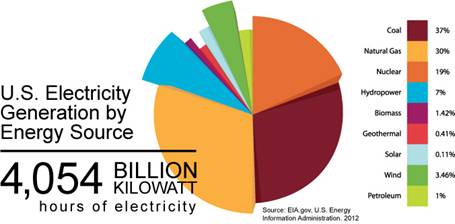

What is Energy? What is the Quality of Energy? The latent ability to carry out an objective. Energy has at least two characteristics associated with it: (a) the amount (of Energy in SI units of Joules, J) and (b) the quality of energy, a more relative measure inferred by calculating the loss of potential following an energy-use process (units of Joules per Kelvin per mol/m3, i.e., J/K.molar density). Units: Electricity (more correctly, Electric Energy) is priced by the kWh of energy used, whereas Gas Energy (Fuel Energy) is priced by the number of Therms generated during use. Note that 1 kJ (Kilojoule) = 0.9485 BTU = 0.0002778 kWhr (kilowatt-hour). One million BTU (MBTU) = 10.002 Therm [US]. And 10 Therm [U.S.] = 293.0 kilowatt-hours. More.…..
What happens when we combust fuels for energy production? The following table shows the pounds of CO2 emitted per million BTU (~1.05 million kJ) of energy from various fuels when combusted. Assuming that a US household consumes energy at the average rate of about 2 KW (~7000 BTU/hr) across a day, a million BTU or KJ number is the approximate equivalent of about 100 lbs. of CO2 emission per week per US household if the energy was produced by combustion (e.g., from natural gas, gasoline, or oil). We have not considered automobile use in daily energy use.
How much CO2 do humans produce when breathing? The average human exhales about 2-3 pounds of carbon dioxide (human activity averages at about 100 Watts or 0.36 BTU/h). On an average day (about 15- 20 lbs a week). The exact quantity depends on activity level (higher activity means more CO2 exhaled). The amount of carbon a human breathes out is almost equal to the amount of carbon a human takes in (from food) minus the amount of carbon that is part of the person’s body mass. Thus, the amount of CO2 humans exhale is roughly balanced by the amount absorbed by plants and other photosynthesis-type reactions. However, note that the human population is approximately 7.5 billion people. Thus, preserving forests, using renewable energy sources, and avoiding combustion during use are essential. What is the greenhouse effect?
Is Momentum Conserved? Why? This relates to Noether’s Theorem described above. (Noether’s Theorem – Wikipedia) Noether’s Theorem is a mathematical statement with several critical applications in physics. It says that if the equations of some system obey symmetry (continuous symmetry), then some conserved quantity is associated with that symmetry. The fact that the laws of physics are the same at any point in space implies that some conserved quantity is associated with this spatial symmetry. It turns out mathematically that this conserved quantity corresponds to what we already defined as “momentum.” The fact that the laws of physics do not change over time (at least in our local universe) implies that some conserved quantity is associated with this temporal symmetry. Mathematically, this conserved quantity corresponds to what we already defined as “energy.” The fact that the laws of physics are the same in every direction in space implies that some conserved quantity is associated with this directional symmetry. Mathematically, this conserved quantity corresponds to what we already defined as “angular momentum.” So by Noether’s Theorem, the quantity we call angular momentum must be conserved in any universe where the laws of physics are “isotropic” or direction-independent. And Energy is conserved because of time symmtery.
Why Use Electric Energy? It is the Genesis of SmartPower Devices and provides a platform for non-toxic energy conversion to valuable objectives. Electric heating devices do not produce Methane or CO2 during use unless specifically intended for a process.
| Weight of Carbon Dioxide per One Million BTU of Burn | Pounds (lb)
(approx) |
|
Diesel fuel /heating oil |
161.3 |
|
Gasoline |
157.2 |
|
Propane |
139.0 |
|
Natural gas – CH4 is a very strong GHG gas) |
117.0 |
| E-Ion Plasma, HGA, or OAB steam at the device | 0.0 |
What is Sustainable or Renewable Energy? Energy can be stored/available in various forms, e.g., electric, gasoline-burning, or from water or wind velocity. We use this energy directly to power a device or convert it (e.g., electricity to heat or vice versa) to carry out a specific objective. The energy we receive and convert for an objective can be reused or is available from an infinite reservoir. Almost all the energy we use is recycled, thanks to energy previously or currently received from our solar system. Some exceptions are energy from deep space, primarily as neutrinos, gravitational waves, and electromagnetic waves. Converting solar, nuclear, or wind energy generally does not produce CO2. It is equally important not to generate CO2 at the point of use. Note that the OAB® or other MHI devices do not produce CO2 when used. Where possible, use electric-only or hybrid solutions to avoid a net increase in CO2 production.
Potential Energy, Kinetic Energy, and Thermal Energy: When we use energy, it is the energy that is stored either in bonds, both nuclear or chemical bonds (nuclear or chemical energy potential), or in the gravitational force fields that make water flow from reservoirs (potential energy/kinetic) or as concentrated charge carriers stored in a battery (as electric potential/field). Kinetic energy relates to the momentum of wind or sea waves. Thermal energy (measured as temperature) is stored in the vibration of molecules or smaller particles. Thermal energy is transferred as heat. Energy can be converted between forms, though sometimes it incurs a penalty. We often transfer or convert energy from heat or work into another form of energy. Energy is always conserved.
Sustainable energy is commonly defined as energy that does not exhaust a source’s energy or mass content quickly. Or at least it will not run out for future generations, e.g., direct solar radiation. More on chemical bonds, radiation, thermodynamics… solar efficiency… A clean energy device does not produce harmful emissions (like methane or CO2) when the device uses/converts energy. Sustainable energy leads to responsible engineering.
How much does energy cost? Very approximately ~10¢ per kWh or ~9¢ per 0.0341 Therms [US] to most users. The price paid per unit amount of energy is very similar (to small-scale users) whether the energy is used in electricity, natural gas, or even gasoline (a bit more variation in price is noted in gasoline). Of course, some energy sources are expensive for now but are expected to become cheaper over time, e.g., volcanic energy.
If the price is not that different, what does Energy efficiency mean to a user? To most individual energy users, improved energy efficiency means using less energy to achieve the same objective. Using less energy means paying less for that energy. Energy prices vary slightly across providers or distributors; e.g., click here. When checking for the best prices, you could note (depending on the country and location) that the energy delivered to you, whether electric or gas, costs almost the same per unit! So gains from better production methods could be marginal, though still significant, when offering a lower price for delivered energy.
Regardless, although the two laws of thermodynamics always set theoretical limits, transformative new technologies may sometimes cleverly reduce energy use within those limits. More on a new postulate for pathways and self-organization…... More on Efficiencies…
Quality is often a comparative concept that relates to the fitness of use! High-temperature energy is one form of high-quality energy. Energy quality is also often measured by its available work potential.
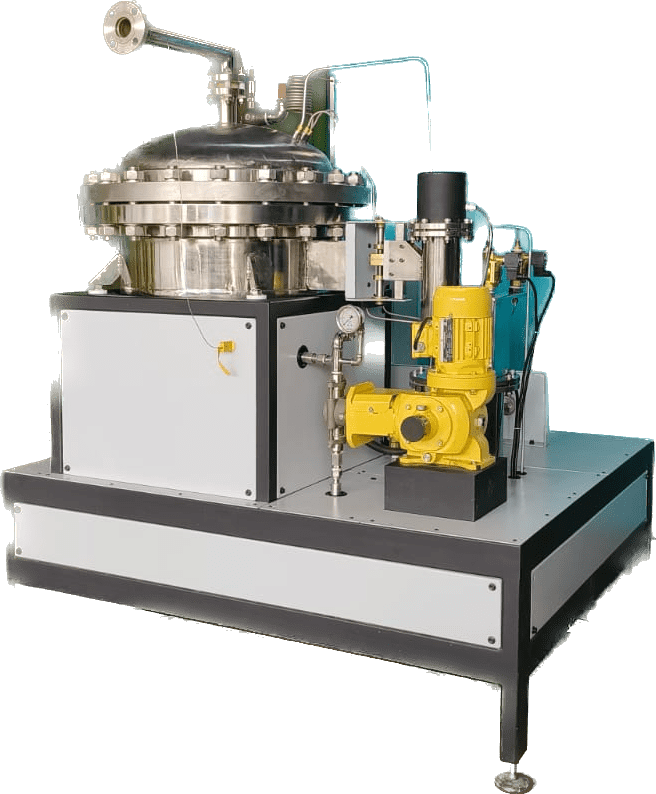
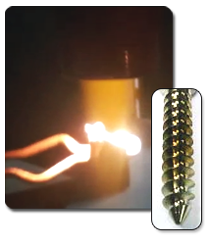
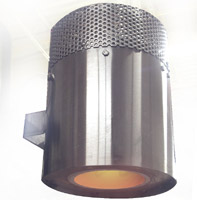
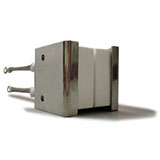
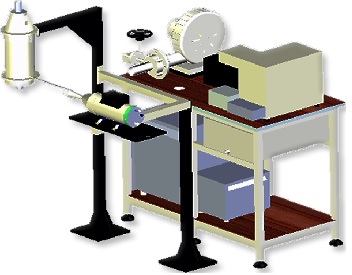
Are there examples of devices that improve Energy efficiency substantially? Yes, particularly those that use smart power. These include Efficient Photonic Devices, Efficient Cars, OAB® Steam, Cascade e-Ion Technologies for Surface Enhancement Engineering, and many more. A photograph of a modern OAB® efficient steam generator and a Cascade e-Ion producing plasma from the air is shown below. These are new, transformative technologies that improve energy consumption through smart power.
What is smart power? The choice of technologies that enable improved energy efficiency and a better working environment. For example, high temperatures often reduce energy waste by speeding up most processes. This has reduced energy use in lighting, surface treatment, process air heating, and steam, from textiles to packaging. Using high-grade energy (smart power devices) is essential for everyone. A high-grade energy example.….
New Concepts in Energy Use: Developing a new law of thermodynamics to predict how shapes evolve… link here for an update. It is a current topic, not yet fully understood!
High temperature equals higher productivity. Use high-temperature SmartSteam instead of high amounts of low-grade energy. This is smart power usage.
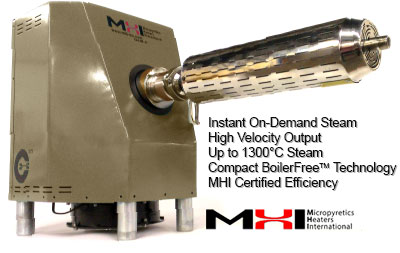 Does Energy Efficiency also imply less pollution? Yes. When energy is used (i.e., spontaneously transformed from one state to another), it is degraded. Degraded energy is lower-quality energy and often also directly or indirectly increases pollutants.
When using electric energy (an ordered form of energy) rather than gas combustion (a disordered form of energy) for a process, additional energy efficiency arises from improved control, lower-harm emissions, and other process-related factors. Combustion of carbon-containing gases (directly or indirectly) produces CO2, which, along with any leaks of Methane (Natural Gas), contributes to erratic atmospheric patterns. See spectra…
Improving the heat transfer rate (speed) of industrial processes becomes more critical as production demands increase. They are improving the speed with less power. MHI offers competitive rates for power machines, with energy efficiency and financing options to support your success. Financing solutions include enabling monthly payments. Approximate payment calculator (click to open). Please compare the Return on Investment (ROI) to estimate daily net earnings. Broad examples are given below; however, please contact MHI for accuracy and applicability to your specific use.
ROI Scenarios. Please contact or call MHI sales for details for your use. Some returns on investment can be very large. For OAB® products for certain CPG or hydronic heating applications, power savings can range from 30% to a whopping 90% in specific scenarios. For some of the Nanostructured GAXP® heating-element configurations, a good scenario, based on a four-year amortization schedule, shows that a $13K monthly investment can lead to a $1M return when adequately installed – i.e., considerable monthly net savings for specific Cascade e-Ion™ applications. A 2K monthly investment may yield $100K in net savings per month (four-year amortization). A relatively light $312 investment in a modern Airtorch® system for enhanced, environmentally friendly die heating can lead to $14K in monthly net savings (four-year amortization scenario). ROI scenarios vary by client and installation, and the estimates above are the best available. Please contact MHI to discuss your specific use cases and assumptions for the scenarios above. MHI has developed and patented energy-efficient technologies and has commercialized devices, building a large group of satisfied customers.
We look forward to adding your name to the hundreds of satisfied MHI customers.
In today’s manufacturing world, you can save money by reducing energy use, improving environmental performance, and achieving better outcomes in a new, enlightened plant. MHI devices are designed to deliver these three benefits. Heat-production technology has improved dramatically over the past ten years, with nanostructured GAXP®, Airtorch, Cascade e-Ion, and One Atmosphere Boilers (OAB) leading the way. The table below shows an approximate calculation of savings from using a more energy-efficient machine—assumptions: one year of continuous use and 10¢/kWhr. Modern thermal energy devices can provide good value. MHI is a choice many users have made to save energy and protect the environment. Please review the testimonials.
Small Print! and Disclaimer:
| This return on investment (ROI) analysis is very approximate. Savings and benefits to the user may be higher or lower than those presented above. The calculations shown are indicative and will vary with specific applications, equipment, and operating conditions. This is an approximate guide, and the template should be modified for the customer’s specific use. Interest rates, energy, equipment, and other costs used in the analysis are always subject to change. MHI does not guarantee or warrant any specific ROI analysis that a purchaser may use in their decision-making process. The buyer/user is solely responsible for an accurate ROI calculation. Financing is not guaranteed and depends on several factors that MHI does not control. |
Information and Tutorial Resources
To understand the basics of energy and power, please click on the MHI 101 Power and Energy tutorial + calculator. Public-private partnerships exist worldwide to improve energy efficiency. Some are briefly discussed below. The following external links are provided as a public service and are not intended to create relationships.
Energy Efficiency Help: Please use the DOE link below to search the State Incentives and Resource Database. The State Incentives and Resource Database is designed to help those seeking energy-efficiency upgrades for their facilities. It is a repository of energy incentive programs, tools, and other resources for commercial and industrial energy managers. Incentives and resources are available at the national, state, county, and local levels. Power utilities, private companies, and non-profits also offer incentives for energy efficiency measures, including rebates, waived fees, tax credits, and loans. Resources include analysis tools, education and training programs, and energy audits.
Environment Help: The generation, conversion, and use of energy can affect the environment. The United States EPA’s regulatory and voluntary programs foster more responsible production and use of energy resources. The link below lets you learn about important energy topics and locate information about EPA energy programs. EPA Clean Energy contact: State Utility Commission Assistance (202) 343-9631. http://epa.gov/energy. Today, you may be able to quickly capture the value of energy savings through many programs offered by various governments and utility companies. MHI can help you establish energy efficiency with our products and technologies. Below are US-based links to online resources and programs that offer incentives and rebates for energy efficiency and emissions compliance. Similar energy programs exist in almost all countries. You could use some of these programs to secure low-cost loans, grants, and energy rebates to purchase MHI energy-efficient products. For many typical configurations and uses, the GAXP and Airtorch® efficiencies could allow about 10kW savings; Cascade e-Ion and OAB solutions may allow over 100kW, and more. MHI furnaces also offer Fiberfree™ insulation and special nanostructured roof hangers. Please get in touch with MHI and join the SAVINGS newsletter.
Regulations and Green Offerings: Pressure certificates, ASME, and local government regulations vary and may change. Please confirm with local authorities. Steam generators operating at One Atmosphere (such as OABs, HGAs, and others) may not require certification. Please click here to review some of the codes posted online.
* Based on 2015-2016 Estimates
|
Additional Useful Links Basics of Surface Smoothing, Peening, and Deburring Basics of Radiation Power Transfer Engineering Units Conversion Calculator Page Important Concepts in Thermodynamics Properties of Gases and Moist Air as a Function of Temperature Review of Equilibrium Constant and Production Speed Calculator |
 OAB Electric Steam Generators. Decarbonized.
|


|
Target |
Energy and Environmental Benefits |
MHI Device |
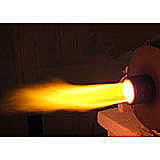
| Transformative Ion Heating Systems | Use powerful CleanElectricFlame™ for continuous VOC removal, rapid heat treatment, and surface treatments from finishing to hardfacing. The operating cost estimate per pound of VOC removed is ~0.5¢* for normal ppm-level contamination. Compare with over $4/lb of gas treated. Please contact MHI to verify the calculations.
Some users choose the e-ion for sustained self-combustion in coal/coke. Aromatics appear to be reduced, although the data is slowly becoming publicly available. Please contact MHI for estimated savings on deposition or surface-treatment applications for materials ranging from soft plastics to hard metal composites. Consider replacing Flame, Induction, or laser-type processes. Use less power during conversion or eliminate combustion flame from your process with the MHI GEN3 LIP System. Click the picture for details or contact MHI. |
High Energy and Velocity e-Ion Plasma™
|
See testimonials. See typical economics… and many more at www.mhi-inc.com.
See success for customers. Energy Units Conversion. Basic Energy Learning Center (MHI101 ENERGY).
Trademarks and copyrights belong to Micropyretics Heaters International Inc. All materials on this website are copyrighted.