MHI Airtorch® Easy Power Calculation Method
Flow vs. Temperature
From 2 KW to 100 kW, 16 MW, 30MW, or even 100MW.
Energy and Environment Improvement with an MHI Airtorch®. Click here.
Calculating Power: The two equations below can be used to approximate power for a known flow rate between 0 and 1000C for an efficient process air heater (at standard conditions, assuming pressure has not changed).
Power in (kW) = SCFM. (DTc)/1755 where (DTc) =Temperature difference in Centigrade between inlet and outlet temperatures.
Power in (kW) = SCFM. (DTF)/3160 where (DTF) = Temperature difference in Fahrenheit between inlet and outlet temperatures.
SCFM = Standard cubic feet/minute for the airflow, i.e., at 0C (32F), 14.69 psi (103.14 kPa) = 1.699 Nm3/h (standard / normal cubic meter per hour)
50 SCFM = 84.95 Nm³/h
A process gas heater may use more power depending on its efficiency at the exit temperature. It is important not to undersize and equally important not to oversize. Working with a knowledgeable, high-efficiency supplier is important. Generally, Airtorch products in the 100 kW+ range are very efficient (>90%), but efficiency could decrease as temperatures increases except for the most modern designs, i.e., depends on the construction type, so use the above calculations only as a guide. In the equation above, SCFM = Standard cubic feet per minute for the airflow, i.e., at 0°C (32°F), 14.69 psi (103.14 kPa) = 1.699 Nm3/h (standard/normal cubic meters per hour). For the 1-10-kW range, efficiency depends on several inlet and outlet factors because the tubing’s metal mass is large relative to the flow. So please use the equation, but be prepared to tweak your flow if necessary. Please factor this in depending on the manufacturer and the type of Airtorch®, or please contact MHI.
Adequate efficiency is important to achieve for any process.
Low efficiency can manifest in too much air or gas for the kW (power) used, which then leads to low temperature output, or too much power, which adds stress to achieve a set flow rate to reach a temperature, and extra losses from pressure drops required to push the larger volume of air. Both types of inefficiencies lead to large operating costs and loss of life. For flow calculations, please contact MHI.
For flow calculations, please contact MHI.
Energy Savings with MHI Airtorch®.
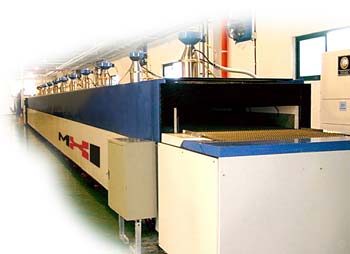
The Airtorch® may also be used in a recuperative mode. MHI can provide an Airtorch® unit with an input temperature above 700°C and an output temperature up to 1200°C, making the MHI DH add-on an ideal component for all large ovens. Large inlet temperatures are commonly available in the very high kW or MW range.
Why do hundreds of customers prefer MHI for their best energy-efficient air heating needs? Now, we are offering new and improved heating elements with an incredible warranty. Please Contact MHI.
When comparing Airtorch® products with heat exchangers, note that MHI Airtorch® units often save considerable energy because of their low pressure drops. This power loss could be substantial with heat exchangers. For example, if a flow of 0.6 kg/s is driven with a 5 Bar (~90 psi) pressure, then almost ~200 kW of power could be wasted driving the flow compared to the Airtorch® systems that offer an extremely low pressure drop (~ 1 psi(g))—or 200 kW if the ultra-low-pressure-drop Airtorch® models are used for 0.1 psig.
Please contact MHI for details.

Please review the properties of gases and formulas to use for power calculations.
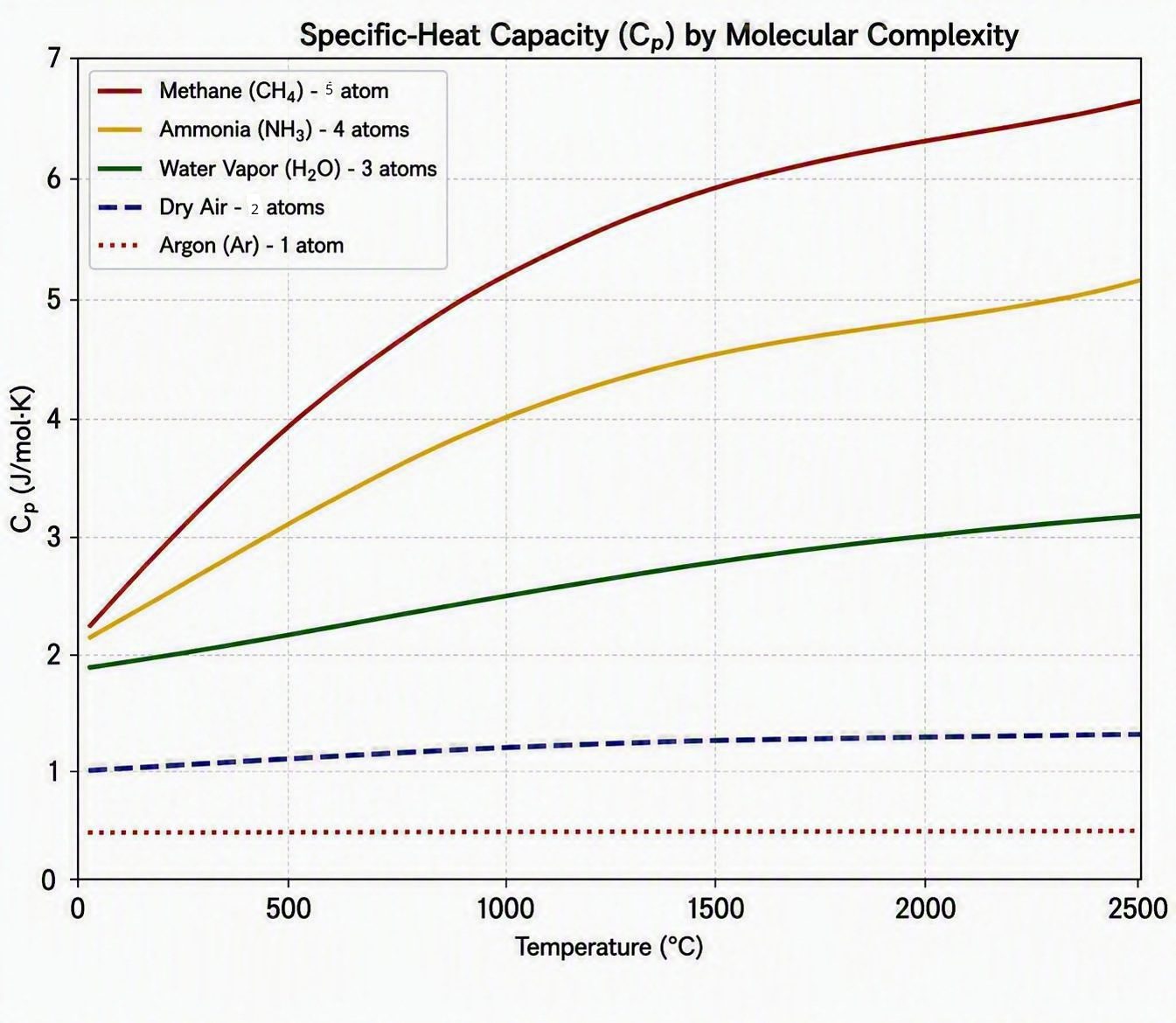

Approximate power for 1 1kg/s of gas. Theoretical only. Contact MHI or link to specific heat page for details.
MHI Airtorch products offer a very low-pressure-drop (low loss).
- 1kW Savings per year is $876 @10c per kWh
- 10kW Savings per year is $8760 @10c per kWh
- 100kW Savings per year is $87600 @10c per kWh
- Optimized power results in better and more efficient processes

Results of a better processes


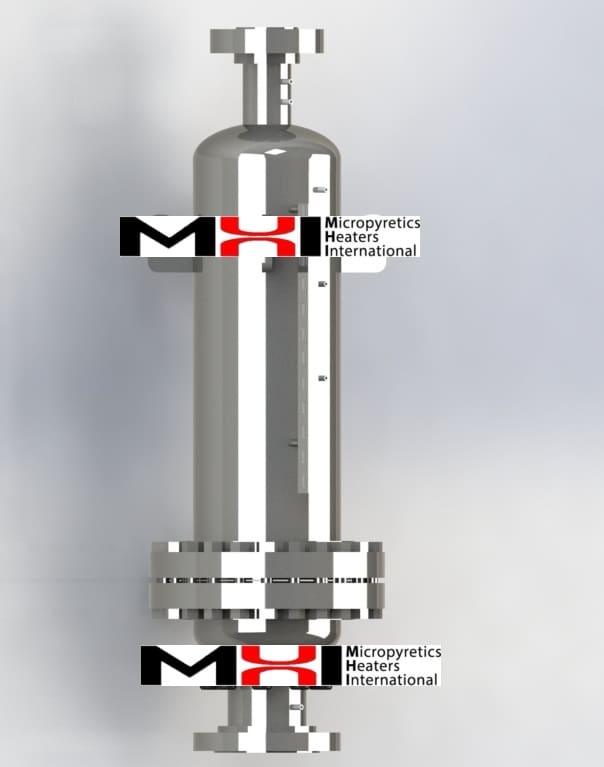


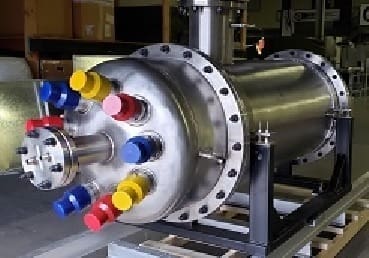
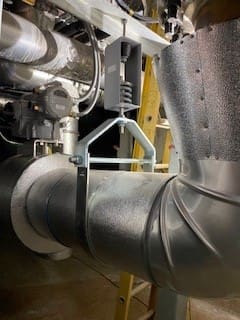
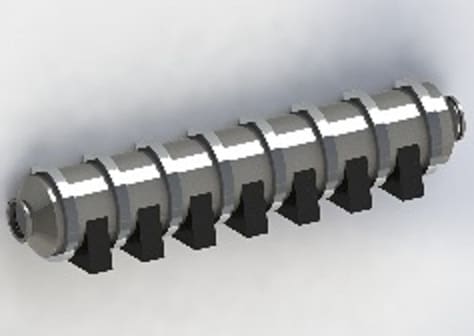
Large Flow MVTA. For 1000-1100°C. These are sealed process gas heaters (THN or DNA class) with a blower or inline capability—high KW – High Flow.
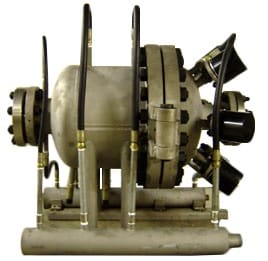
Large Flow GTA – For high-pressure vessel Airtorch use. Custom engineering. Please contact us directly for assistance.
Typical Conversion of Gas
LTA – Up to 900°C. LTA is a process heater for air that requires a compressed air input.
VTA—Up to 900°C. A VTA is a process gas heater with a fan or blower and low-flow sensor capability.
MTA925 and GTA – Up to 925°C/1100°C. These are flow or inline-sealed process gas heaters that can take compressed air or compressed gas input—new Models for the MVTA-DPF-DNA Class.
DPF – Up to 1150°C-1250°C/~2200°F. DPF models can take fan or blower input and a compressed air/gas input.

| N2 gas | Weight | Gas | ||
| pounds (lb) |
kilograms (kg) |
cubic feet (SCF) |
cu meters (Nm3) |
|
| 1 pound | 1.0 | 0.4536 | 12.83 | 0.36 |
| 1 kilogram | 2.205 | 1.0 | 28.24 | 0.8 |
| 1 SCF gas | 0.07245 | 0.03286 | 1.0 | 0.02832 |
| 1 Nm3 gas | 2.757 | 1.2506 | 35.3 | 1.0 |
| SCF (Standard cubic foot) gas is measured at 1 atmosphere and 70°F. Nm3 (Normal cubic meter) gas was measured at 1 atmosphere and 0°C. |
10 SCFM (Standard Cubic Feet per Minute) of air equals approximately 20.81 kg/h at standard US GACI industrial conditions (i.e., 68°F and 14.7 psia).
Because “Standard” in SCFM reference points vary slightly by region and industry, the exact mass flow rate conversion depends on the specific standard definition being applied:
Quick conversion mm H2O column difference to psi:
1 mm H2O column difference to psi = 0.00142 psi
50 mm H2O column difference to psi = 0.07112 psi
100 mm H2O column difference to psi = 0.14223 psi
Quick Conversion of bar to kPa
| bar | ~ kPa |
| 1 | ~100 |
| 1.2 | ~120 |
| 1.4 | ~140 |
| 2.0 | ~200 |

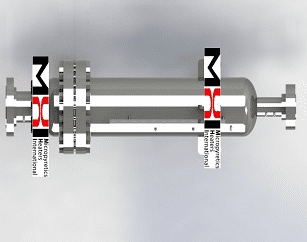
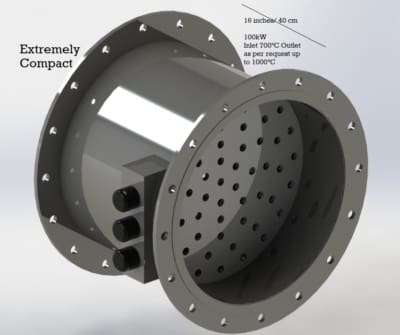
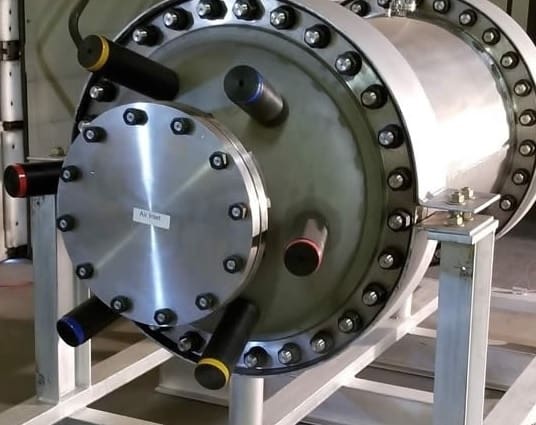
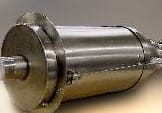


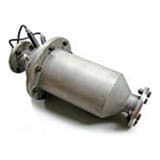
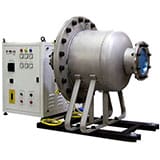


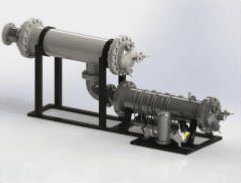
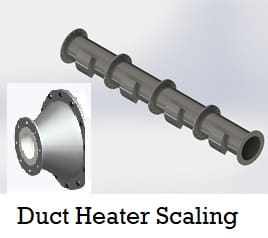


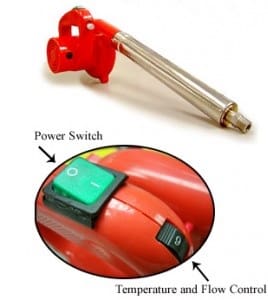

Airtorch® Mode. Heat from cold gas to hot gas quickly.
Airtorch® Recuperator Mode. SH models accept inlets up to 300°C and under special conditions to 600C.
Example-Air. Use the blue-black line for a steady state and cold start.
Use the purple line only in recuperator mode.
Conversions:
Actual: 1 m³= 35.31467 ft³
Hagen-Poiseuille equation: ΔP = 8μQL / πR^4 ( MHI Airtorch models offer low friction)
_________________________________________
Standard value (approximate Conversion)
1 Nm³/h is ~ 0.59 SCFM
Or
1 SCFM ~1.6 Nm³/hr.
_________________________________________
Power
1 MBH = 0.293 kW

Psst: An approximate way to theoretically calculate is SCFM = KW x 3160/∆T where ∆T is in °F. Use his method (and a little margin) for temperatures below 1200°F. For higher than 1200°F, Contact MHI.
Speed of Sound in Air as a function of Temperature and Pressure

Ideation


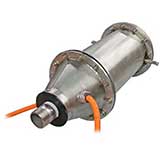


Tori-spherical


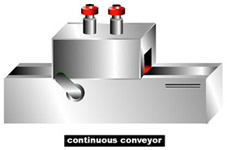

Continuous Overn with Airtorch